About
A comprehensive laboratory screening program designed to assess the presence of common bacterial, viral, and fungal infections affecting the urogenital system. Depending on the selected panel, modern diagnostic methods are used, including PCR (Real-time), microscopy, and immunoassays (serological testing).
What's included
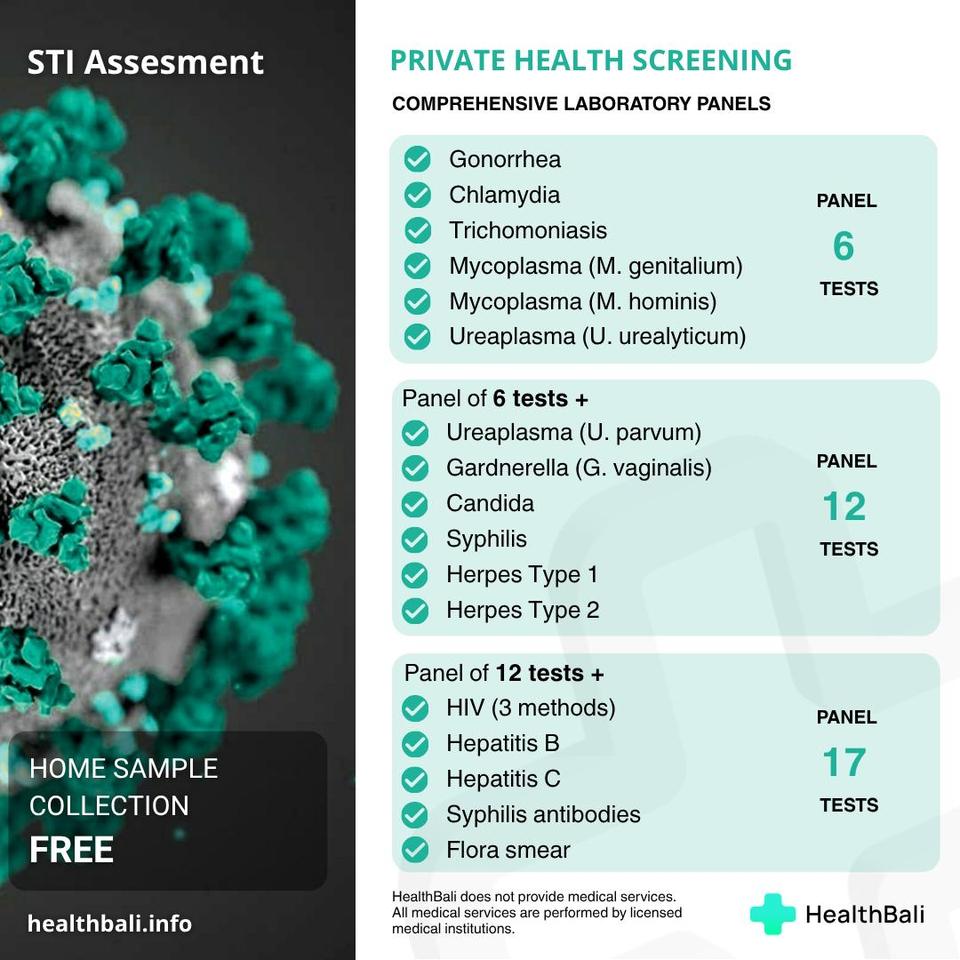
- Gonorrhea (Neisseria gonorrhoeae)
- Chlamydia (Chlamydia trachomatis)
- Trichomoniasis (Trichomonas vaginalis)
- Mycoplasma (Mycoplasma genitalium)
- Mycoplasma (Mycoplasma hominis)
- Ureaplasma (Ureaplasma urealyticum)
- Gonorrhea (Neisseria gonorrhoeae)
- Chlamydia (Chlamydia trachomatis)
- Trichomoniasis (Trichomonas vaginalis)
- Mycoplasma (Mycoplasma genitalium)
- Mycoplasma (Mycoplasma hominis)
- Ureaplasma (Ureaplasma urealyticum)
- Ureaplasma (Ureaplasma parvum)
- Gardnerella (Gardnerella vaginalis)
- Candida (Candida albicans)
- Syphilis (Treponema pallidum)
- Herpes Simplex Virus Type 1 (HSV-1)
- Herpes Simplex Virus Type 2 (HSV-2)
- Gonorrhea (Neisseria gonorrhoeae)
- Chlamydia (Chlamydia trachomatis)
- Trichomoniasis (Trichomonas vaginalis)
- Mycoplasma (Mycoplasma genitalium)
- Mycoplasma (Mycoplasma hominis)
- Ureaplasma (Ureaplasma urealyticum)
- Ureaplasma (Ureaplasma parvum)
- Gardnerella (Gardnerella vaginalis)
- Candida (Candida albicans)
- Syphilis (Treponema pallidum)
- Herpes Simplex Virus Type 1 (HSV-1)
- Herpes Simplex Virus Type 2 (HSV-2)
- HIV (4th generation testing, 3 methods)
- Hepatitis B (HBsAg)
- Hepatitis C (Anti-HCV Total)
- Syphilis antibodies (TPHA)
- Microscopy of urogenital smear (spores, hyphae, trichomonads, leukocytes, epithelial cells, clue cells, intracellular and extracellular gram-negative diplococci, gram-positive and gram-negative rods, and gram-variable coccobacilli)
- Free home sample collection
- Personal online support from a manager throughout all stages of the check-up
- Free results interpretation (+20% discount on a full doctor consultation for detailed evaluation and further treatment or prevention plan)
Preparation
- Men and women: Avoid sexual intercourse
- Women: Do not perform vaginal douching
- Women: Do not use vaginal suppositories, creams, or gels
- Tests should not be done during menstruation
- Men and women: Perform regular hygiene (no antiseptics)
- Men and women: Do not urinate for 2–3 hours before the test
- Fasting is not required
Beyond these general rules, preparation for some tests and diagnostic procedures may require specific instructions from your treating doctor.
Bruising (hematoma) after a blood test
Blood collection is a routine procedure, but it may sometimes cause bruising at the puncture site.
During venous blood collection both the skin and the vein are punctured. When the needle is removed, blood can leak into the surrounding tissue – especially if the pressure in the vein is high – and a hematoma (bruise) may form.
Contributing factors include the body's physiological and anatomical features: the condition of the veins and vessels, their thickness and elasticity, position and visibility.
How to avoid bruising
- Press firmly on the puncture site for 5–10 minutes.
- Keep the plaster on for at least 30 minutes.
- Avoid straining the arm – don't lift anything heavy for an hour and don't drive for the first 15–20 minutes after the draw. Even minor activity can lead to extensive bruising and swelling around the site.