About
An expert medical program for a comprehensive assessment of the endocrine system and thyroid health.
What's included
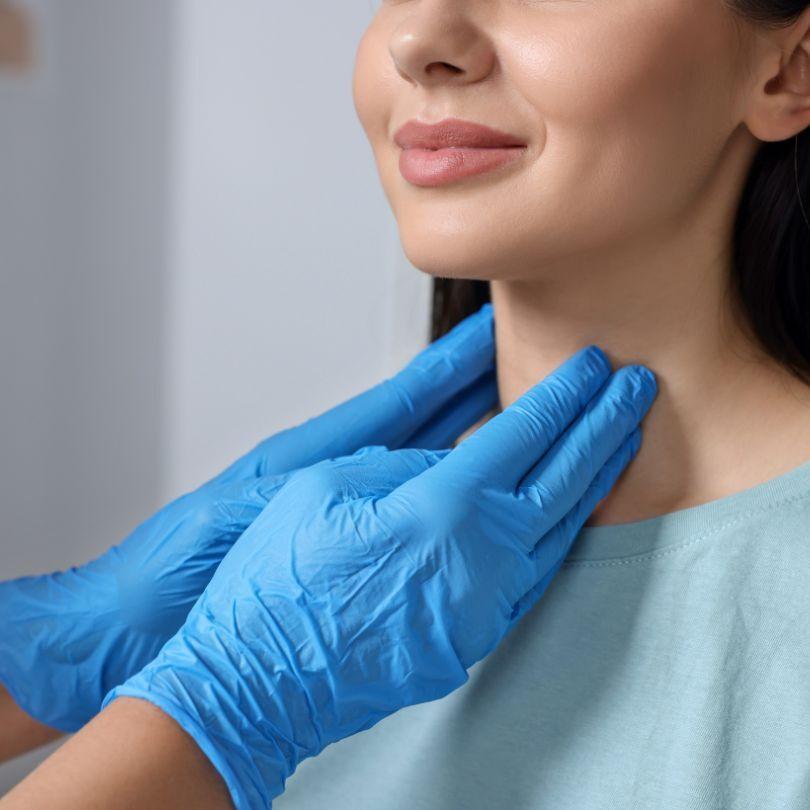
The thyroid gland affects the entire body. Even the smallest deviations from the norm can negatively impact metabolism, the heart, nervous system, and reproductive system. The earlier a thyroid pathology is detected, the easier it is to treat. Our expert program is designed for those who are aware of their thyroid issues and manage the condition.
The program also helps those who have noticed weight fluctuations, tachycardia, skin and hair problems, mood swings, and reduced endurance.
The program also helps those who have noticed weight fluctuations, tachycardia, skin and hair problems, mood swings, and reduced endurance.
Program Composition:
Express – Fast and Accurate Thyroid Function Assessment
• Free T4
• Free T3
• Thyroid-stimulating hormone (TSH)
• Hematocrit
• Hemoglobin
• Red blood cells (RBC)
• Platelets
• White blood cells (WBC)
• White blood cell differential
• Erythrocyte sedimentation rate (ESR)
• Free T4
• Free T3
• Thyroid-stimulating hormone (TSH)
• Hematocrit
• Hemoglobin
• Red blood cells (RBC)
• Platelets
• White blood cells (WBC)
• White blood cell differential
• Erythrocyte sedimentation rate (ESR)
Extended – Comprehensive Thyroid Function Evaluation
• Thyroid ultrasound
• General practitioner consultation
• Free T4
• Free T3
• Thyroid-stimulating hormone (TSH)
• Hematocrit
• Hemoglobin
• Red blood cells (RBC)
• Platelets
• White blood cells (WBC)
• White blood cell differential
• Erythrocyte sedimentation rate (ESR)
• Thyroid ultrasound
• General practitioner consultation
• Free T4
• Free T3
• Thyroid-stimulating hormone (TSH)
• Hematocrit
• Hemoglobin
• Red blood cells (RBC)
• Platelets
• White blood cells (WBC)
• White blood cell differential
• Erythrocyte sedimentation rate (ESR)
Maximum – In-Depth Endocrine System Assessment
• Electrocardiogram (ECG)
• Thyroid ultrasound
• General practitioner consultation
• Thyroid-stimulating hormone (TSH)
• Free T4
• Free T3
• Anti-thyroid peroxidase antibodies (Anti-TPO)
• Parathyroid hormone (PTH)
• Cholesterol
• Calcium
• Albumin
• Inorganic phosphate
• Ferritin
• Urinalysis (Complete)
• Hematocrit
• Hemoglobin
• Red blood cells (RBC)
• Platelets
• White blood cells (WBC)
• White blood cell differential
• Erythrocyte sedimentation rate (ESR)
• Electrocardiogram (ECG)
• Thyroid ultrasound
• General practitioner consultation
• Thyroid-stimulating hormone (TSH)
• Free T4
• Free T3
• Anti-thyroid peroxidase antibodies (Anti-TPO)
• Parathyroid hormone (PTH)
• Cholesterol
• Calcium
• Albumin
• Inorganic phosphate
• Ferritin
• Urinalysis (Complete)
• Hematocrit
• Hemoglobin
• Red blood cells (RBC)
• Platelets
• White blood cells (WBC)
• White blood cell differential
• Erythrocyte sedimentation rate (ESR)
Additional Services:
• Personal online support from a manager throughout the entire examination process
• Free at-home sample collection
• Personal online support from a manager throughout the entire examination process
• Free at-home sample collection
Bruising (hematoma) after a blood test
Blood collection is a routine procedure, but it may sometimes cause bruising at the puncture site.
During venous blood collection both the skin and the vein are punctured. When the needle is removed, blood can leak into the surrounding tissue – especially if the pressure in the vein is high – and a hematoma (bruise) may form.
Contributing factors include the body's physiological and anatomical features: the condition of the veins and vessels, their thickness and elasticity, position and visibility.
How to avoid bruising
- Press firmly on the puncture site for 5–10 minutes.
- Keep the plaster on for at least 30 minutes.
- Avoid straining the arm – don't lift anything heavy for an hour and don't drive for the first 15–20 minutes after the draw. Even minor activity can lead to extensive bruising and swelling around the site.