About
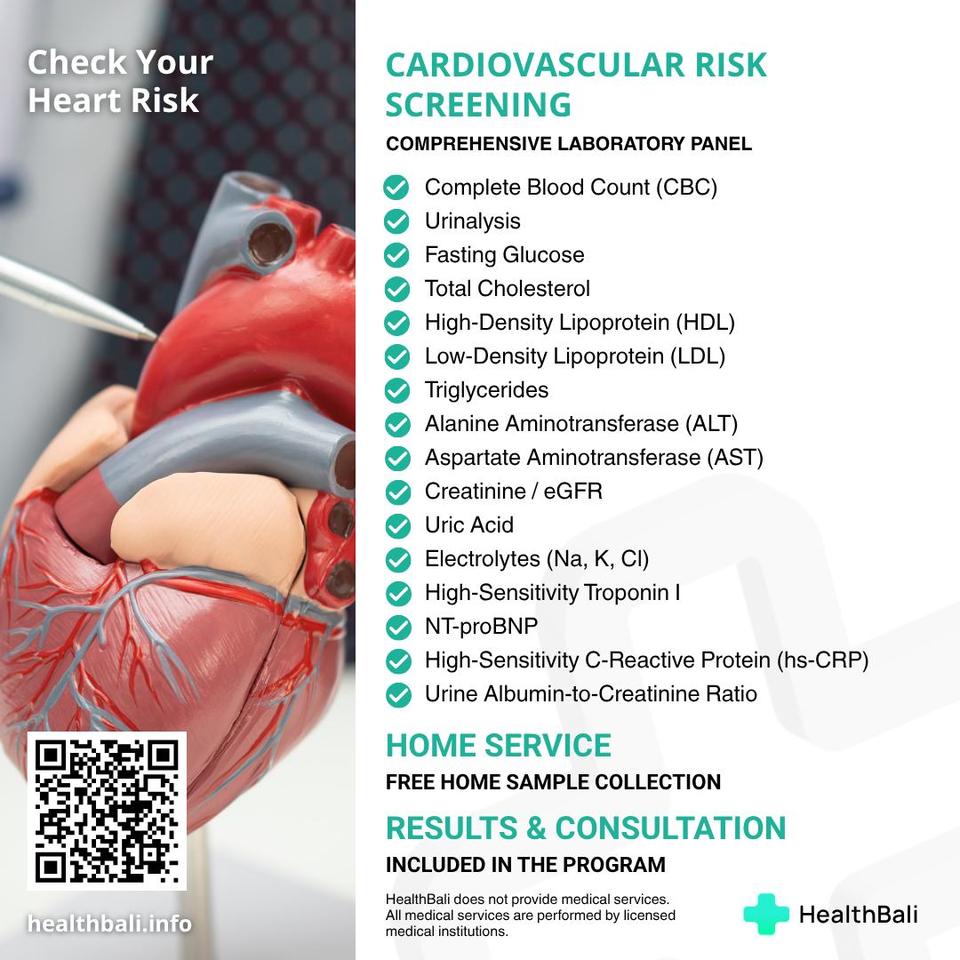
A comprehensive checkup designed to assess cardiovascular health and identify risk factors for cardiovascular disease. The panel includes a wide range of laboratory tests to evaluate lipid profile, glucose metabolism, liver and kidney function, inflammation markers, and specific cardiac biomarkers.
What's included
- Blood electrolytes (Na, K, Cl)
- High-sensitivity troponin I
- NT-proBNP (N-terminal pro-B-type natriuretic peptide)
- High-sensitivity C-reactive protein
- Urine albumin/creatinine ratio
- Complete blood count (hematocrit, hemoglobin, red blood cells, platelets, white blood cells, differential count, and ESR)
- Urinalysis
- Fasting glucose
- Total cholesterol
- High-density lipoprotein (HDL)
- Low-density lipoprotein (LDL)
- Triglycerides
- Aspartate aminotransferase (AST)
- Alanine aminotransferase (ALT)
- Creatinine / GFR
- Uric acid
Additional services:
✔ Free home sample collection
✔ Personal online support from a manager throughout all stages of the check-up
✔ Doctor consultation for results review and further treatment or prevention plan
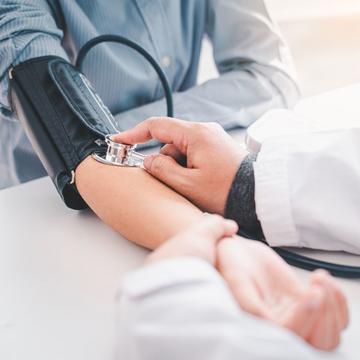
Bruising (hematoma) after a blood test
Blood collection is a routine procedure, but it may sometimes cause bruising at the puncture site.
During venous blood collection both the skin and the vein are punctured. When the needle is removed, blood can leak into the surrounding tissue – especially if the pressure in the vein is high – and a hematoma (bruise) may form.
Contributing factors include the body's physiological and anatomical features: the condition of the veins and vessels, their thickness and elasticity, position and visibility.
How to avoid bruising
- Press firmly on the puncture site for 5–10 minutes.
- Keep the plaster on for at least 30 minutes.
- Avoid straining the arm – don't lift anything heavy for an hour and don't drive for the first 15–20 minutes after the draw. Even minor activity can lead to extensive bruising and swelling around the site.