About
A quick and effective screening designed to assess iron levels and identify potential causes of anemia. Who is this check-up for? Individuals experiencing constant fatigue, weakness, or dizziness People with chronic illnesses that may lead to anemia Those at high risk of anemia (vegetarians, pregnant women, individuals with chronic blood loss)
What's included
✔ Complete Blood Count (CBC) – includes hematocrit, hemoglobin, red blood cells (RBC), platelets, white blood cells (WBC), WBC differential, and erythrocyte sedimentation rate (ESR) to analyze blood health and detect potential problems.
✔ Serum Iron – measures iron levels in the blood, helping to detect imbalances early.
✔ Total Iron-Binding Capacity (TIBC) – assesses the body’s ability to bind and transport iron.
✔ Transferrin – provides additional insight into iron-binding capacity.
✔ Ferritin – evaluates iron storage levels in the body.
Includes all tests from the Express package, plus:
✔ Vitamin B12 – essential for red blood cell formation and nervous system function. Deficiency can cause anemia and neurological issues.
✔ Folic Acid (Vitamin B9) – crucial for DNA synthesis, cell division, and red blood cell production. Deficiency may lead to megaloblastic anemia and elevated homocysteine levels, affecting cardiovascular health.
✔ Free at-home sample collection
✔ Personal online support from a manager throughout the entire process
Bruising (hematoma) after a blood test
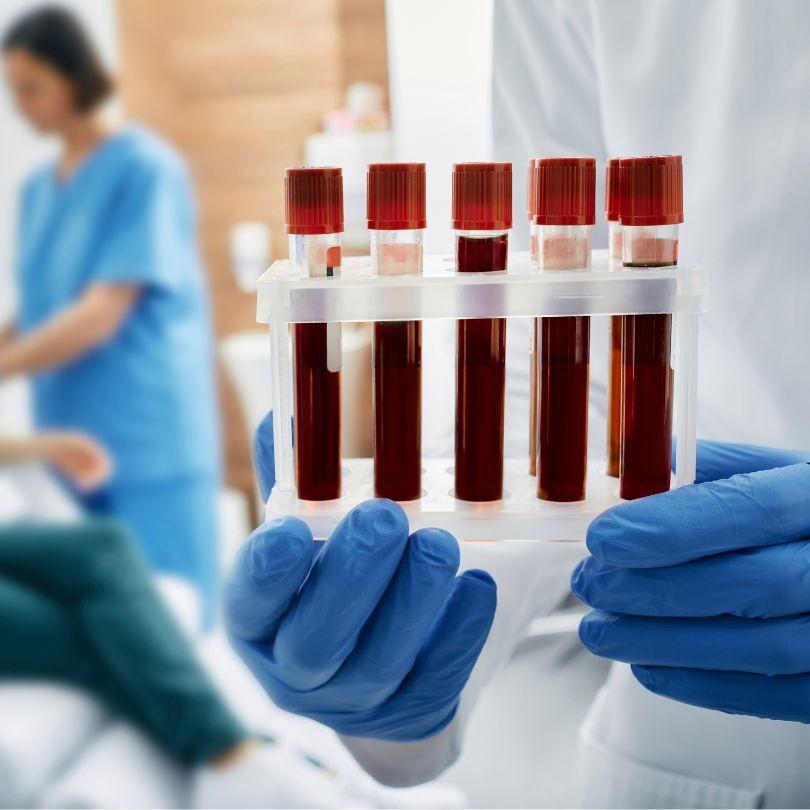
Blood collection is a routine procedure, but it may sometimes cause bruising at the puncture site.
During venous blood collection both the skin and the vein are punctured. When the needle is removed, blood can leak into the surrounding tissue – especially if the pressure in the vein is high – and a hematoma (bruise) may form.
Contributing factors include the body's physiological and anatomical features: the condition of the veins and vessels, their thickness and elasticity, position and visibility.
How to avoid bruising
- Press firmly on the puncture site for 5–10 minutes.
- Keep the plaster on for at least 30 minutes.
- Avoid straining the arm – don't lift anything heavy for an hour and don't drive for the first 15–20 minutes after the draw. Even minor activity can lead to extensive bruising and swelling around the site.